Skip to content
Meta Description: Not all CI flexo presses cost the same — and not all jobs need the most expensive one. This guide compares economic CI and full servo CI presses across 5 key dimensions, with a decision framework to match the press to your orders.
Ask most packaging converters about CI flexo presses and they picture one thing: a high-end, full-servo machine with a six-figure price tag. That perception keeps many buyers away from CI technology entirely — even when their production would clearly benefit from it.
The reality is different. CI flexo presses come in distinct tiers, and the right tier depends on your orders, not on what looks impressive. The most common comparison buyers face is between:
- Economic CI presses — central impression stability at an entry-level investment
- Full servo CI presses — maximum automation, speed, and precision at a premium price
Choosing wrong in either direction is expensive. Buy a full servo press for simple 2-color woven bag jobs and you’ve paid for capability you’ll never use. Buy an economic press for 10-color cosmetics packaging and you’ll hit quality limits fast.
This guide breaks down the real differences — and gives you a practical framework to match the press to your production.

1. The Five Real Differences Between Economic CI and Full Servo CI
1.1 Drive System: Big Gear vs Full Servo
| Economic CI | Full Servo CI | |
|---|---|---|
| Drive | Servo motor + central big gear | Independent servo per color station |
| Registration control | ±0.15mm (manual + motor fine-tune) | ±0.075mm (automatic, 360°) |
| Gear-related marks | Possible on demanding jobs | Eliminated (gearless) |
The big gear in an economic CI press is a proven, reliable design. The full servo system eliminates the gear train entirely, replacing it with electronic synchronization — which removes gear backlash and opens 360° registration adjustment.
1.2 Plate Cylinders: Shaft Type vs Sleeve
| Economic CI | Full Servo CI | |
|---|---|---|
| Plate cylinder | Shaft type (included) | Sleeve type (lighter, faster changeover) |
| Changeover time | Longer (manual change) | Faster (sleeve exchange) |
| Cost per repeat size | Lower | Higher (sleeves cost more) |
Sleeve technology is the bigger differentiator for converters with many short runs and frequent job changes. For long, stable runs, shaft cylinders remain perfectly practical.
1.3 Speed
| Economic CI | Full Servo CI | |
|---|---|---|
| Typical printing speed | Up to 200 m/min | Up to 400 m/min |
| Suitable for | Standard flexible packaging | High-volume, demanding materials |
Most flexible packaging orders — shopping bags, mailers, woven bags, standard film packaging — run comfortably within 200 m/min. The 400 m/min capability of full servo machines matters for very high-volume producers and for thin films at extreme speeds.
Automation is a “skill multiplier” — it reduces dependence on experienced operators and shortens setup. For converters with skilled operators and stable jobs, the manual systems on an economic CI are perfectly workable.
1.5 Investment
| Economic CI | Full Servo CI | |
|---|---|---|
| Typical price level | ~1/3 of full servo | Premium (often 3x economic) |
| ROI horizon | Faster for standard jobs | Justified only by volume/precision |
The price gap is roughly 3x. That’s not a small difference — it’s the difference between a machine that pays for itself on standard orders and a machine that needs high-end work to justify itself.

2. What an Economic CI Press Does Well
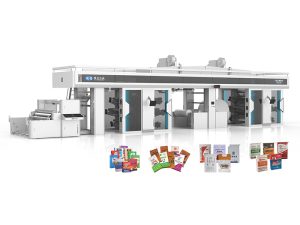
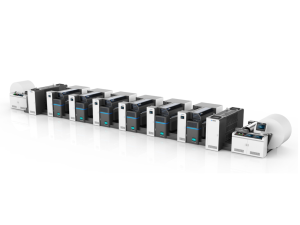
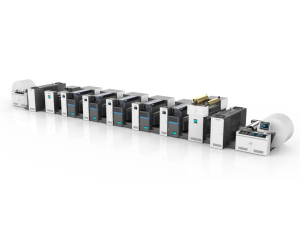
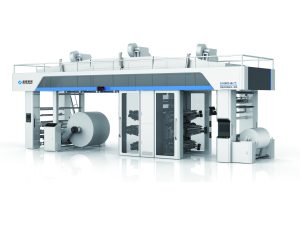
An economic CI press (like the BFCI-B series) is built for the mainstream of flexible packaging:
Best-fit orders:
- PE shopping bags, plastic mailers, courier bags
- PP woven bags and laminated woven bags
- Non-woven bags and simple paper packaging
- Standard 4-8 color flexible packaging
- Jobs requiring stable registration (±0.15mm) at up to 200 m/min
Why it works: the central impression drum — the component that makes film printing stable — is fully present. What’s scaled back is servo automation and sleeve technology, not the core structure. For the majority of converters, this is the capability they actually need.
3. When a Full Servo CI Press Is the Right Investment
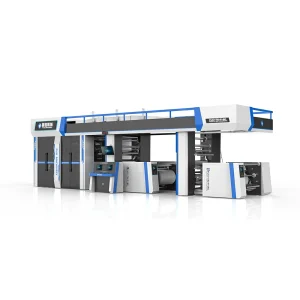
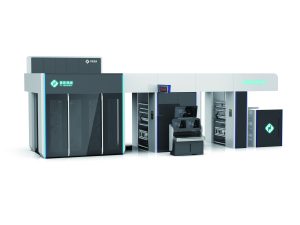
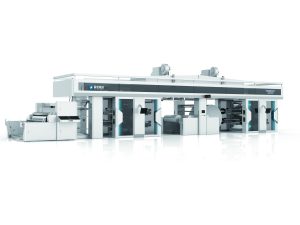
A full servo CI press (like the PJCI-TS-F series) justifies its premium under specific conditions:
When it’s the right call:
- High-volume production above 300 m/min sustained demand
- Premium packaging requiring ±0.075mm or better (cosmetics, pharmaceutical, shrink sleeves)
- Frequent job changes across many repeat sizes (sleeve technology pays off)
- Ultra-thin films (below 20μm) at high speed
- 10+ color work with white ink and varnish
- Markets where customers pay for “wow” packaging
When it’s overkill:
- Standard bags and mailers at 150-200 m/min
- 4-8 color jobs with stable, repeatable designs
- Budget-sensitive markets where price drives purchasing

4. Decision Framework: Match the Press to Your Orders
Ask yourself these five questions before choosing:
| Question | Economic CI | Full Servo CI |
|---|---|---|
| What speed do your orders actually need? | ≤200 m/min | >300 m/min consistently |
| How many colors? | 4-8 | 8-12 with white/varnish |
| What precision does the customer demand? | ±0.15mm acceptable | ±0.075mm or better |
| How many job changes per week? | Few, long runs | Many, short runs |
| What’s your budget and ROI horizon? | Faster payback | Justified by volume |
Rule of thumb: If your typical order runs at 200 m/min or below, uses 4-8 colors, and tolerates ±0.15mm registration — an economic CI press is likely the financially smarter choice. Upgrade to full servo only when volume, precision, or changeover speed demands it.
Mistake 1: Buying full servo “for the future”
Buying capability you won’t use for 2-3 years ties up capital now. Grow into the need, then upgrade.
Mistake 2: Assuming economic CI can’t hold registration
±0.15mm on a central drum is genuinely stable for most packaging. Test it on your material before dismissing it.
Mistake 3: Ignoring changeover costs
If your job mix has many short runs, sleeve technology on a full servo press may pay for itself through reduced changeover time — calculate this before assuming it’s overkill.
Mistake 4: Only comparing price tags
Compare total cost of ownership: energy, waste, changeover time, operator skill requirements, and resale value — not just the invoice.

FAQ: Economic CI vs Full Servo CI
What is the main difference between economic CI and full servo CI?
The drive system (gear vs independent servo), plate cylinder type (shaft vs sleeve), speed capability (200 vs 400 m/min), precision (±0.15 vs ±0.075mm), and price (roughly 3x).
Is an economic CI press accurate enough for film printing?
Yes. The central impression drum — the key to stable film printing — is fully present in economic CI presses. ±0.15mm registration is stable for most packaging applications.
When should I pay for a full servo CI press?
When you consistently run above 300 m/min, need ±0.075mm or better precision, have frequent short-run job changes, or print premium multi-color packaging (cosmetics, shrink sleeves, pharma).
How much cheaper is an economic CI press?
Typically around one-third the price of a comparable full servo machine. Exact pricing depends on width, color count, and configuration.
Can I upgrade an economic CI press later?
Some options (corona, UV drying, no-stop unwind) can be added. Full servo conversion is not practical — the machine architecture differs. Choose the tier that fits your 3-5 year plan.
What materials can an economic CI press print?
Film (PE, BOPP, PET 12-200μm), paper (16-300 g/m²), non-woven (15-180 g/m²), and PP woven bags (30-260 g/m²) — the same substrate range as full servo CI within its speed envelope.
Conclusion: The Smarter Buy Is the One That Fits
CI flexo printing doesn’t have to be a luxury purchase. Economic CI presses bring the central impression structure — the foundation of stable film printing — at roughly one-third the investment of full servo machines. For the majority of packaging converters, that’s the financially smarter choice.
Match the machine to your orders, not to the brochure. If your production runs at 200 m/min, uses 4-8 colors, and tolerates ±0.15mm, an economic CI press delivers the capability you need — and pays for itself faster.
Not sure which tier fits your production? Tell us your materials, speed targets, and job mix — we’ll recommend honestly, even if it means the less expensive option.
About Zhejiang Puji Packaging Machinery Co., Ltd.
Zhejiang Puji Packaging Machinery Co., Ltd. is a technology-driven group enterprise with over 20 years of flexo engineering experience, 50+ invention patents, and 500+ machines installed across 50+ countries. All machines are ISO 9001:2015 and CE certified. Our CI flexo range spans economic (BFCI-B), mid-range (KSCI-E), and full servo sleeve (PJCI-TS-F) platforms.
Tags: economic CI flexo press, full servo CI flexo, CI flexo printing machine price, budget CI flexo, BFCI-B, PJCI-TS-F, flexo press selection, CI vs full servo, flexible packaging machine