Skip to content
Meta Description: All 2-color flexo presses look similar — until you compare. Here are 5 things that separate a premium stack press from an average one: design, speed, width, components, and configuration.
The 2-color stack flexo press is the most common entry point into the flexible packaging business. It prints PE shopping bags, non-woven tote bags, simple PP woven bag markings, hamburger wrap paper — the everyday packaging jobs that keep small converters busy and profitable.
But here’s the problem: because so many manufacturers make them, buyers tend to compare them by price alone. Two machines at a similar price — how different can they be?
Very different, it turns out.
In this guide, we’ll walk through the 5 things that actually separate a premium 2-color stack press from an average one: design, speed, width, components, and configuration. These are the differences that show up not on the first day, but in the first year — in your output, your quality, and your maintenance costs.
Price tags look similar. Machines don’t.
1. Design — The First Impression Your Customer Gets
Ask yourself this: when a customer walks into your factory for the first time, what do they see before you say a single word? Your machines.
Most 2-color flexo presses on the market share a common visual language: functional parts bolted onto a frame, exposed wiring, rough sheet-metal work. They look like machines assembled to do a job — which is fine, until a customer uses that impression to judge your entire operation.
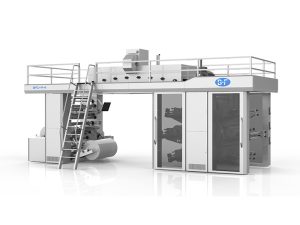
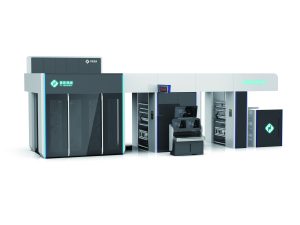
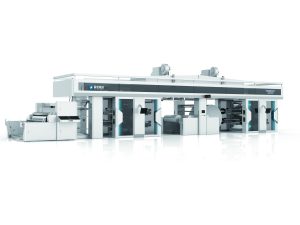
The BFYT-B 2-color stack press was redesigned from the ground up with industrial design as a priority:
- Clean, modern lines — a machine that looks like it was designed, not assembled
- Enclosed print stations with safety guards — operator protection and dust control as standard
- Premium fit and finish — the kind of machine that makes your factory look more capable than it did the day before
When a customer visits your factory, the equipment they see becomes their baseline for your quality. A premium-looking machine raises that baseline before you even start talking about specs.

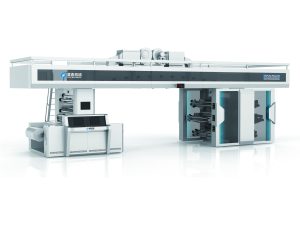
▲Ordinary 2-color flexographic printer
2. Speed — Your Production Ceiling
Speed determines how many bags, wraps, or sheets you can produce in a shift. It’s the most direct lever on your revenue.
Here’s what’s typical on the market:
| Machine Type | Typical Printing Speed |
|---|---|
| Entry-level 2-color stack press | 50 – 80 m/min |
| Mid-range 2-color stack press | 80 – 100 m/min |
| BFYT-B 2-color stack press | Up to 130 m/min |
The arithmetic is simple. In a 12-hour shift:
- At 80 m/min: roughly 57,600 meters of material printed
- At 130 m/min: roughly 93,600 meters printed
That’s over 60% more output per shift with the same labor cost — and the difference compounds every single day the machine runs.
If you’re planning to grow your bag-printing business, speed isn’t a luxury. It’s the difference between a machine you’ll outgrow in two years and one that grows with you.

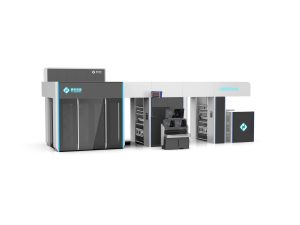
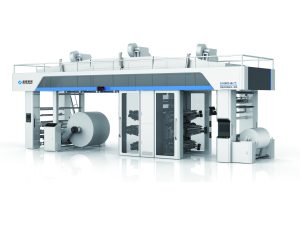
▲2-color flexographic print unit
3. Width — The Orders You Can and Can’t Take
Web width defines your addressable market. Every width you can’t handle is an order you have to turn away.
Most 2-color stack presses on the market top out at 600–1200mm. That covers standard shopping bags and typical non-woven bags, but it leaves a gap:
- Wide non-woven roll stock
- Wide PP woven fabric
- Large-format paper and film jobs
The BFYT-B handles material up to 1600mm (1570mm maximum printing width). That means:
Web width defines your addressable market. Every width you can’t handle is an order you have to turn away.
Most 2-color stack presses on the market top out at 600–1200mm. That covers standard shopping bags and typical non-woven bags, but it leaves a gap:
- Wide non-woven roll stock
- Wide PP woven fabric
- Large-format paper and film jobs
The BFYT-B handles material up to 1600mm (1570mm maximum printing width). That means:
- You can run wide jobs your competitors simply can’t accept
- You can split wide rolls into multiple narrow jobs for better efficiency
- You have headroom to take on larger orders as your business grows
In a competitive market, the machine that accepts more jobs wins more jobs.

4. Components — What You Can’t See Determines What You’ll Replace
The most honest question you can ask any machinery supplier is: “What brand are the core components?”
Here’s what you’ll often hear:
“Domestic high quality.”
That phrase tells you nothing. Which brand? What specifications? What’s the expected lifespan?
On the BFYT-B, the core components are named, openly:
| Component | Brand |
|---|---|
| PLC + Touchscreen | Siemens (Germany) |
| Main bearings | NSK (Japan) |
| Low-voltage electrical | Schneider (France) |
These aren’t premium upgrades — they’re standard. Why does it matter?
- Siemens PLC means reliable control logic, easy diagnostics, and globally available support
- NSK bearings mean the rotating core of your machine is built to run for years, not months
- Schneider electrical means the wiring and switchgear won’t be the reason your line stops
A supplier who names their components is a supplier who stands behind them. A supplier who says “domestic high quality” is asking you to trust them without evidence.
5. Configuration — Where Printing Quality Is Really Made
Two machines can have the same price, same speed, and same width — and still print completely differently. The difference is in the configuration of the printing station.
Here’s the honest comparison:
| Component | Common on Entry-Level Presses | BFYT-B Standard |
|---|---|---|
| Anilox roller | Steel / chrome-plated roller | High-precision ceramic anilox roller |
| Doctor blade | Open doctor blade (uneven inking) | Enclosed chamber doctor blade |
| Ink supply | Manual inking, dries during stops | Auto ink circulation (no dried-ink downtime) |
| Tension control | Manual adjustment / friction brake | Magnetic powder auto tension |
| Edge guide (EPC) | Often absent | Photo-electric edge guide |
| Loading/unloading | Manual handling | Hydraulic auto loading/unloading |
Each of these differences shows up in your daily production:
- Ceramic anilox + enclosed blade = consistent ink transfer, less ink waste, cleaner color
- Auto ink circulation = no dried ink after stops, faster restarts
- Auto tension + EPC = stable web path, straight winding, less waste
- Hydraulic loading = less manual labor, safer operation
The price is entry-level. The configuration is professional.

Side-by-Side Summary
| Dimension | Typical 2-Color Stack Press | BFYT-B-2C |
|---|---|---|
| Design | Functional, assembled look | Redesigned, premium finish, safety guards |
| Printing speed | 50 – 100 m/min | Up to 130 m/min |
| Max material width | 600 – 1200 mm | 1600 mm |
| PLC | “Domestic high quality” | Siemens (Germany) |
| Main bearings | Unspecified | NSK (Japan) |
| Low-voltage electrical | Unspecified | Schneider (France) |
| Anilox roller | Steel / chrome | Ceramic |
| Doctor blade | Open | Enclosed chamber |
| Ink supply | Manual | Auto circulation |
| Tension | Manual / friction | Magnetic powder auto |
| Edge guide | Often absent | Photo-electric |
| Loading/unloading | Manual | Hydraulic auto |
Who Is This 2-Color Press For?
The BFYT-B-2C is built for converters running 1-2 color jobs on these materials:
| Application | Substrates |
|---|---|
| PE shopping bags / vest bags | PE film (12 – 200 μm) |
| Non-woven tote bags | Non-woven fabric (15 – 180 g/m²) |
| Woven bag marking | PP woven fabric (30 – 260 g/m²) |
| Food-service paper | Roll paper (16 – 300 g/m²) |
| General flexible packaging | Film, paper, laminates |
It’s also the right choice for:
- Startups entering the packaging business with a smart, low-risk first machine
- Small converters who want professional quality without paying for color stations they’ll never use
- Growing factories that want a machine with speed and width headroom
FAQ: 2-Color Flexo Printing Machine
How much does a 2-color flexo printing machine cost?
Prices vary significantly by width, components, and configuration. Entry-level 2-color stack presses typically range from 10,000to30,000+ depending on specifications. The best approach is to compare total value — components, speed, width, and after-sales support — not just the price tag.
What speed can a 2-color stack flexo press reach?
Typical 2-color stack presses run 50–100 m/min. Higher-specification models, such as the BFYT-B, reach printing speeds up to 130 m/min, which translates to significantly higher output per shift.
Can a 2-color flexo press print on non-woven fabric?
Yes. Most 2-color stack flexo presses handle non-woven fabric in the 15–180 g/m² range, making them suitable for non-woven tote bag printing.
Can a 2-color flexo press print on PP woven bags?
Yes. The BFYT-B handles PP woven fabric from 30 to 260 g/m², suitable for simple 1-2 color markings on woven sacks.
Can a 2-color flexo press print on paper?
Yes. Roll paper from 16 to 300 g/m² is within the standard substrate range, covering applications like hamburger wrap, sandwich paper, and bakery bags.