Skip to content
Meta Description: Belt drive or gear drive for your stack flexo press? This unbiased technical comparison covers the real advantages and limitations of each system — and how to choose the right one for your production.
When most packaging converters shop for a flexo press, they compare color count, web width, printing speed, and price. Few ask the question that determines the machine’s long-term behavior:
What drives the plate cylinders — a belt or a gear?
The drive system is the skeleton of a flexo press. It transfers power from the motor to every printing station and controls how precisely each color aligns with the next. Choose right, and your machine holds accuracy for years. Choose without asking, and you may discover the answer the hard way — six months into production, when registration starts drifting and no amount of adjustment brings it back.
This article offers an honest, technical comparison of the two drive systems used in stack-type flexo presses: synchronous belt drive and gear drive. No marketing, no bias — just how each works, what it does well, where it struggles, and how to decide which fits your production.
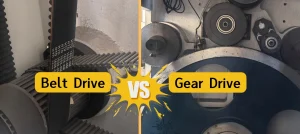
How Each Drive System Works
Synchronous Belt Drive
A synchronous (toothed) belt drive uses a rubber belt with teeth that mesh with pulleys on the motor and the plate cylinder shaft. The motor turns the pulley, the belt transfers rotation to the cylinder, and the teeth prevent slipping.
Belt drives are widely used in entry-level machinery because they are simple, inexpensive, and quiet. The belt itself is a consumable component, designed to be replaced periodically.
Gear Drive
A gear drive transfers power through precisely machined metal gears that mesh directly. The motor drives a gear train, and each printing station receives rotation through rigid metal-to-metal engagement.
Gear drives are common in higher-specification machines because they offer rigid, positive transmission — there is no elastic component between the motor and the cylinder.
Synchronous Belt Drive: What It Does Well, and Where It Struggles
Advantages
Lower initial cost. Belt drives are significantly cheaper to manufacture than precision gear trains. That cost saving passes directly to the buyer — belt-driven presses are typically the most affordable option in any product line.
Quieter operation. A rubber belt running on pulleys produces less mechanical noise than metal gears meshing. In a shop with multiple machines running, this is a real — if modest — comfort factor.
Simple maintenance entry point. Belt tensioning and replacement are straightforward procedures that any competent operator can learn. No specialized tools or gear expertise required.
Shock absorption. The elasticity of a belt provides a degree of cushioning against sudden load changes, which some operators find forgiving during setup.
Limitations
Micro-stretching over time — a physical inevitability. Belts are made of rubber reinforced with cords. Under continuous tension and repeated flexing — think 12-hour shifts, 300 days a year — the cords gradually elongate. This is not a defect of any particular brand; it is the physics of the material. The result is a slow, cumulative increase in transmission slack that translates into registration drift.
Long-term accuracy decay. Because the belt’s effective length changes as it stretches, the angular relationship between the motor and the plate cylinder shifts over time. A press that holds ±0.15mm in month one may drift measurably by month six or eight.
Elastic deformation at speed. At higher speeds, belts flex and stretch momentarily under load. This micro-elasticity can introduce subtle, speed-dependent registration variation that is difficult to tune out.
Periodic replacement required. Belts are consumables. They need regular tension checks and eventual replacement — typically every 6 to 12 months under continuous production — meaning planned downtime and recurring cost.
Gear Drive: What It Does Well, and Where It Struggles
Advantages
Rigid, positive transmission. Metal gears mesh with zero elasticity. Every revolution of the motor produces an exactly proportional revolution of the cylinder. There is no component that stretches, flexes, or slips.
No stretch, no drift. Because there is no belt to elongate, the accuracy you set up on day one remains the accuracy you run with on day one thousand. Long-term registration stability is the defining characteristic of gear drive.
Superior high-speed stability. Gear trains maintain precise phase relationships at high speeds, where belt elasticity becomes a measurable factor. For production running above 130 m/min, gear drive is the more reliable architecture.
Long service life. Precision gears, properly lubricated, are designed to operate for decades. There is no planned replacement cycle equivalent to belt changes.
Limitations
Higher initial cost. Precision gear manufacturing requires hardened alloys, accurate machining, and tight tolerances. This is reflected in the machine price — gear-driven presses cost more upfront than equivalent belt-driven models.
Slightly higher noise. Metal-to-metal meshing produces more audible noise than a belt, particularly at high speed. In practice this is manageable and within normal industrial levels, but it is worth noting.
Requires lubrication maintenance. Gear trains need periodic lubrication and inspection. This is routine, but it is a maintenance item that belt drives do not have.
Quality matters enormously. A poorly manufactured gear train — with sloppy tolerances or soft materials — performs worse than a good belt drive. Gear drive is only as good as the engineering behind it.

Side-by-Side Comparison
| Dimension | Belt Drive | Gear Drive |
|---|---|---|
| Initial cost | Lower | Higher |
| Long-term accuracy | Declines as belt stretches | Stable |
| High-speed performance | Elastic deformation risk | Rigid, reliable |
| Operating noise | Lower | Slightly higher |
| Maintenance | Periodic tensioning & replacement | Periodic lubrication |
| Consumable parts | Belt (replace every 6–12 months) | None (gears designed for decades) |
| Best for | Budget-first buyers, moderate precision | Long-term precision, continuous high-speed production |
Which One Should You Choose? A Decision Guide
There is no universally “better” drive system — only what fits your production reality. Here is how to think about it.
Belt drive may be the right choice if:
- Your budget is the primary constraint, and you need the lowest possible entry point
- Your print quality requirements are moderate (±0.2mm registration is acceptable)
- You run at moderate speeds (below 130 m/min) with intermittent production
- You are willing to budget for periodic belt inspection and replacement
- You plan to upgrade or replace the machine within a few years
Gear drive may be the right choice if:
- You need registration accuracy to stay consistent over years of production
- You run continuous shifts at high speed (130 m/min or above)
- You want to minimize planned downtime and consumable costs
- You plan to operate the machine for 5+ years
- Your customers’ requirements are tightening — longer runs, stricter QC, barcode-level precision
A practical perspective
The difference in upfront cost between belt and gear drive is real, but it is a one-time difference. The difference in long-term behavior — accuracy stability, downtime, and consumable expense — compounds every month the machine runs. When you build a total-cost-of-ownership model, the gap narrows significantly over a 5-year horizon.

What to Ask and Look for When Buying
Before you sign a purchase order for a stack flexo press, put these questions to your supplier:
1. “What drive system does this model use?”
The answer tells you more about the machine’s design philosophy than any spec sheet line.
2. “What accuracy can you guarantee after 12 months of production?”
Many suppliers quote “accuracy” as a fresh-machine number. Ask for the long-term number.
3. “What is the belt replacement interval and cost?” (if belt-driven)
This is a recurring cost. Get the number in writing.
4. “What is the lubrication schedule?” (if gear-driven)
Routine but necessary. Confirm you have the skills and access.
5. “Can I run a long trial at production speed?”
Speed matters less than what happens to accuracy after 30–60 minutes of continuous running.
6. “Show me the quality of the gears or belts.”
Ask for the component brands and specifications. Reputable suppliers name them openly.

Both Drive Systems. One Honest Recommendation.
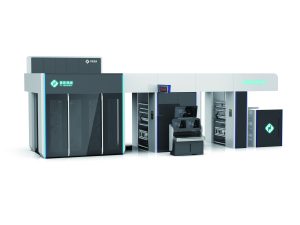
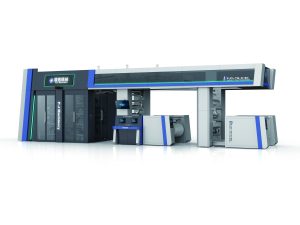
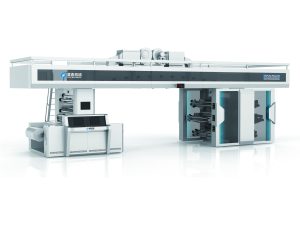
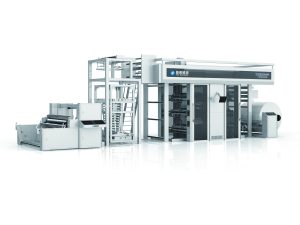
At Puji Machinery, we manufacture stack flexo presses with both drive systems — the BFYT-B with belt drive, and the BFYT-C with gear drive. We do not believe one is universally superior. We believe the right machine depends on your budget, your materials, your speed requirements, and how long you plan to run it.
- Budget-first, entry-level, moderate precision? The BFYT-B belt-driven stack press delivers a capable machine at the lowest possible entry point.
- Long-term precision, continuous high-speed production? The BFYT-C gear-driven stack press is engineered for accuracy that does not fade.
Whichever you choose, you get the same foundation: 20+ years of flexo engineering experience, ISO 9001:2015 certified manufacturing, CE certification, and 500+ machines installed across 50+ countries.
Not sure which drive system fits your production? Tell us your materials, your speeds, and your quality targets — we will recommend honestly, even if it means recommending the less expensive option.
About Zhejiang Puji Packaging Machinery Co., Ltd.
With 20+ years of industry experience, 50+ invention patents, and 500+ machines deployed across 50+ countries, Puji Machinery is a trusted manufacturer of flexographic printing presses, slitting rewinders, and packaging converting equipment. All machines are ISO 9001:2015 and CE certified.
Tags: stack flexo press drive system, belt drive vs gear drive flexo, synchronous belt flexo press, gear driven flexo printing machine, BFYT-B stack press, BFYT-C gear drive stack press, flexo press registration accuracy, stack type flexo printing machine