Skip to content
Selecting the optimal flexographic printing machine is crucial for production quality and ROI. Puji Machinery (www.pujimachinery.com), with over 20 years of experience in the printing and packaging industry and having served more than 500 business partners globally, provides this in-depth technical comparison to assist your procurement decision.
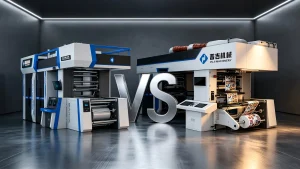
In‑Depth Analysis of Stack Type Flexo Press
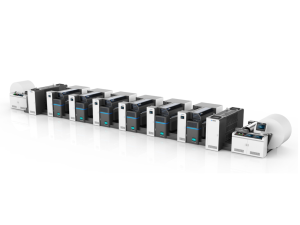
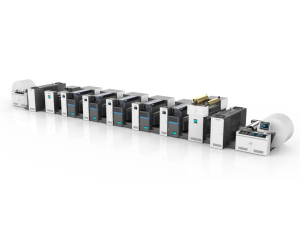
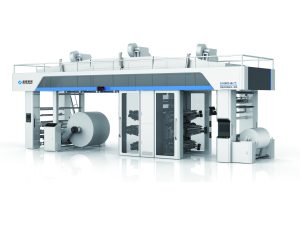
The Stack Type flexo press features printing units stacked vertically or horizontally on the main wall panel, each driven by independent gear transmission for sequential substrate passage.
Key verified technical parameters include registration accuracy typically at ±0.15 to ±0.25 mm (commonly ±0.2 mm in production), printing speed for servo models ranging 10–180 m/min with mainstream stable run at 70–150 m/min, available web widths from 600–1200 mm up to 800–2000 mm for industrial bags, color stations 2–8 with flexible dual‑side configurations (e.g., 3+3), and compatible substrates such as roll paper, plastic film, non‑woven fabric, woven PP, and kraft paper.
Primary advantages are compact structure, low investment cost, easy front‑and‑back printing via guide rollers, and convenient color‑group adjustment; limitations involve complex transmission reducing registration and difficulty in inline post‑press integration.

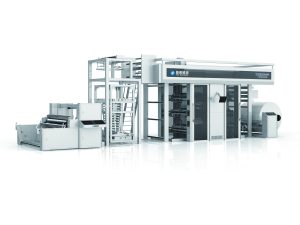
▲BFYT-B stack type flexo printing machine
In‑Depth Analysis of Satellite (CI) Flexo Press
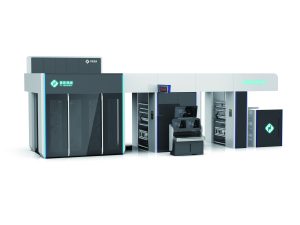
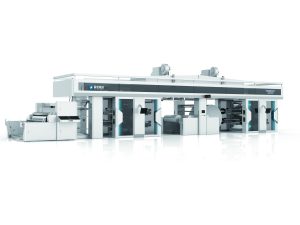
The Satellite (Central Impression) press arranges all color units symmetrically around a large central impression cylinder, with substrate clinging tightly to complete multi‑color in one revolution.
Documented specifications show registration accuracy of ±0.1 mm as standard, while Puji’s sleeve gearless CI model achieves ±0.05 mm; printing speed spans 50–200 m/min for BFCI‑B series and up to 600 m/min (650 m/min mechanical) for high‑end sleeve types, with industry high‑end around 300–500 m/min; web width covers 600–2200 mm; color stations 2–12 (Puji 4–12); and ideal substrates are thin extensible films PE, BOPP, PET, PVC, foil, and non‑woven.
Benefits include minimal tension variation, extreme precision, and rigid high‑speed structure; drawbacks are higher cost, single‑side printing per pass, tight unit distance causing drying challenges, and weak inline finishing.
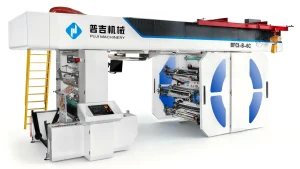
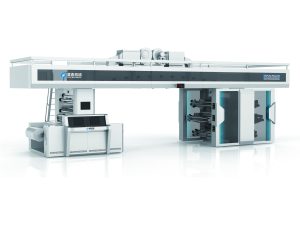
▲BFCI-B CI type flexo printing machine
Comprehensive Tabular Comparison with Detailed Parameters
The following table summarizes core metrics from industry reports and manufacturer data for clear differentiation.
| Parameter | Stack Type Flexo Press | Satellite (CI) Flexo Press |
| Structure | Vertically/horizontally stacked independent units | All units around central impression drum |
| Registration Accuracy | ±0.15 ~ ±0.25 mm (typ. ±0.2 mm) | ±0.1 mm (high‑end ±0.05 mm) |
| Max Speed | 70–180 m/min (servo) | 200–600 m/min (Puji up to 600) |
| Print Width | 600–2000 mm | 600–2200 mm |
| Color Stations | 2–8 (flexible dual‑side) | 2–12 (single‑side per pass) |
| Substrate Range | Paper, non‑woven, woven, card | PE/BOPP/PET films, foil, non‑woven |
| Double‑sided Print | Easy via guide roller path | Difficult, single‑side per revolution |
| Relative Cost | Lower (economic) | Higher (premium) |
| Ideal Application | Labels, paper bags, frequent job change | High‑volume soft packaging, films |
| Drying/Post‑press | Easier unit spacing for drying | Compact, drying limited, less inline |
The data above reflects typical configurations confirming Satellite excels in precision and speed while Stack offers flexibility and cost efficiency.
Detailed Enterprise Selection Guide (Expanded)
With Puji Machinery’s 20+ years in the printing industry and 500+ served partners, we provide a multi‑dimensional recommendation to help you choose between Stack and Satellite types precisely.
1. Recommendation by Industry Packaging Application
- Food Soft Packaging (snack bags, composite films, liquid pouches): Hygiene and low VOCs are mandatory. Satellite (CI) flexo with 6–8 colors + water‑based ink is the mainstream for mass production, ensuring ±0.1 mm registration and 150–300 m/min speed, perfectly fitting high‑volume food membrane lines. Puji’s satellite presses meet this compliance‑heavy scenario.
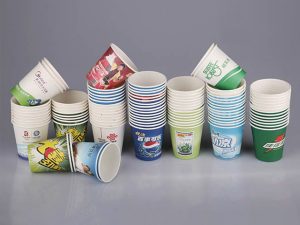
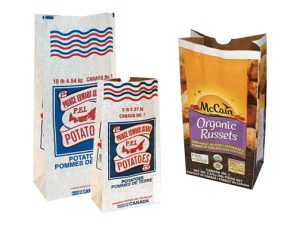
- Paper Bags / Paper Cups (food paper packaging): Flexo with water‑based ink is ideal. Stack type is compact, low‑cost, and enables easy double‑sided printing for paper bags, perfectly suiting SMEs with frequent changeovers and ROI focus. Puji stack type delivers pragmatic economy for such orders.
- Non‑woven Bags (eco shopping bags): Stack type is recommended for its flexibility, easy color‑group adjustment, and cost‑efficiency in small‑batch multi‑variety orders, a proven choice for growing factories. Puji has deployed many lines for non‑woven printers.
- General Plastic Packaging Bags: Ordinary PE/PP bags → stack type economical; high‑end film labels or medical bags → satellite mandatory for precision.
- Pharmaceutical Packaging (aluminum foil, blisters, box labels): Satellite with UV ink & GMP‑clean design needed, ±0.1 mm precision, easy to certify. Puji’s CI models support such strict standards.
2. Recommendation by Substrate Material
- PE / BOPP / PVC Thin Films: These stretchable films demand minimal tension variation. Satellite (CI) type excels with central drum wrap (±0.1 mm, up to 600 m/min), eliminating deformation. Puji CI handles PE/PET/CPP professionally.
- Paper / Cardboard / Kraft: Stack type handles wide paper widths, easy dual‑side via guide rollers, and its ±0.2 mm accuracy is sufficient for most labels and bags.
- Non‑woven / Woven PP: Stack type adaptable for non‑woven; for woven bags, satellite 4+4 dual‑side specialized mode boosts耐磨 production.
3. Other Key Selection Angles
- Order Volume & Flexibility: High‑volume long‑run → Satellite; small‑batch frequent job change → Stack.
- Compliance & Sustainability: Food/medical need FDA/BRC, low VOC. Puji machines support water/UV ink, ISO/CE certified.
- Budget & Floor Space: Stack lower cost, smaller footprint; Satellite higher investment but higher output[prev data].
Trust Puji Machinery with 20+ Years Expertise
Puji Machinery has dedicated over two decades to packaging machinery integration R&D, manufacturing, and service, successfully partnering with more than 500 clients across 50+ countries, offering both Stack and Satellite presses with ISO/CE certification and 50+ patents. Visit www.pujimachinery.com for professional consultation and reliable after‑sales support to empower your printing business.