Skip to content
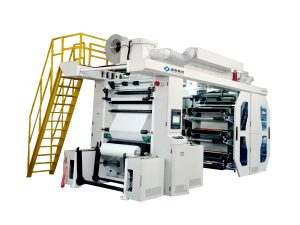
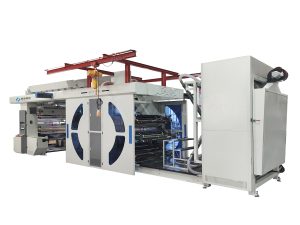
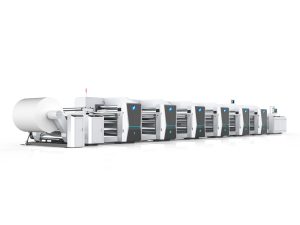
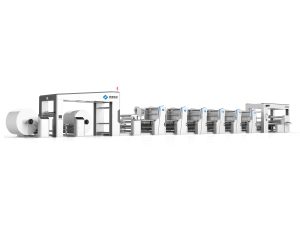
For label converters focused on high-end markets, print quality, consistency, and flexibility are non-negotiable. Unit-type flexographic printing machines have become the preferred technology for these demanding applications. Unlike stack or common-impression presses, unit-type presses arrange each printing station as an independent module along a linear web path. This design offers unparalleled precision and adaptability, making it the top choice for producing premium labels that demand sharp images, tight registration, and complex finishes.
Unit-Type vs. Other Flexo Press Designs
The advantages of a unit-type press become clear when compared directly to other common flexo configurations. The table below highlights the key differences.
| Feature | Unit-Type Flexo Press | Stack-Type Flexo Press | Central Impression (CI) Flexo Press |
|---|---|---|---|
| Web Path | Linear, horizontal path through independent stations. | Vertical path around stacked stations. | Wraps around a large, single central drum. |
| Registration Accuracy | Excellent; electronic line-shaft control ensures precision across all colors. | Good for simpler jobs, but can drift on longer runs. | Exceptional for thin, extensible films; the standard for high-accuracy. |
| Substrate Versatility | Very High; handles thin films, paper, and rigid board equally well. | Good for papers and boards, less ideal for thin films. | Best for thin, stretchy films; limited ability for thick/rigid stock. |
| In-Line Processing | Highly Flexible; can integrate rotary die-cutting, lamination, cold foil, screen printing between units. | Limited inter-station space for adding complex modules. | Very limited space between stations on the drum; difficult to add extra processes. |
| Drying Capacity | Maximum; ample space for powerful inter-station dryers, essential for high-speed, high-quality work. | Good inter-station drying possible. | Limited space on the drum restricts inter-station drying length. |
| Accessibility & Makeready | Excellent access to all stations for quick plate, anilox, and sleeve changes. | Good access to individual stations. | Stations around the drum can be less accessible, potentially slowing changeovers. |
Superior Print Quality and Registration
The cornerstone of premium label production is flawless print quality, and the unit-type press excels here. Because each printing station is mechanically independent and electronically synchronized, operators can achieve and maintain exceptional registration—the precise alignment of colors—across the entire job. This “gearless” design, where servo motors drive each deck, eliminates the cumulative mechanical backlash that can affect other press types. For intricate designs, fine text, and process color work, this precision ensures every dot is exactly where it should be, resulting in sharp, vibrant labels.
Unmatched In-Line Finishing Flexibility
Premium labels rarely stop at simple printing. They often require enhancements like embossing, foiling, laminating, or die-cutting. The linear, open design of a unit-type press is perfectly suited for this. There is ample space between printing stations to integrate a wide variety of in-line finishing modules. This allows converters to print, decorate, and finish a label in a single, continuous pass. This inline capability not only boosts efficiency by eliminating separate offline processes but also improves registration between the print and the finish (e.g., precisely aligning foil with printed areas), which is critical for a high-end appearance.
Exceptional Versatility Across Substrates
Premium label makers work with a vast range of materials, from thin, delicate films for clear labels to thick, textured papers for craft products. A unit-type press handles this diversity with ease. The linear web path and individually adjustable tension zones mean the press can be finely tuned to the specific properties of each substrate. Unlike a central impression press, which is optimized for thin films, or a stack press, which excels with board, the unit-type design provides the control needed to run virtually any label stock without compromising on quality or speed.
Optimized Drying for Complex Ink Systems
High-quality printing often involves specialized inks, coatings, and adhesives that require precise drying. The generous distance between stations on a unit-type press allows for the installation of powerful, long inter-station dryers. This is a significant advantage. Whether using water-based inks, UV-curable coatings, or hybrid systems, each color can be thoroughly dried or cured before the next is applied. This “dry trapping” prevents wet inks from intermixing, preserving color purity and dot definition—an absolute necessity for achieving the sharp, clean look of premium labels.
Efficiency and Ease of Operation
In today’s competitive market, efficiency is key. Unit-type presses are designed with the operator in mind. The independent stations are easily accessible, making job changeovers faster and less labor-intensive. Anilox rolls, plates, and sleeves can be changed quickly and safely. Furthermore, the modular nature of these presses means they can be configured exactly for a converter’s needs, and additional print or finishing units can often be added later as the business grows. This combination of accessibility and scalability makes them a highly efficient and future-proof investment for label specialists.
FAQs
Q: What exactly is a “unit-type” flexo press?
A: It’s a flexographic press where each color printing station is a completely independent module arranged in a straight, horizontal line. The web travels from one unit to the next, allowing ample space for drying and adding extra processing modules between colors.
Q: Why is a unit-type press better for premium labels than a stack press?
A: The key advantages are superior registration accuracy (thanks to servo drives) and far greater flexibility for inline finishing. The linear design of a unit press provides easy access to add modules like rotary die-cutters or foiling units, which is difficult on a vertical stack press.
Q: Can a unit-type press handle both thin films and thick paper labels?
A: Yes, this versatility is one of its greatest strengths. The linear web path and precise, independent tension control at each station allow it to be optimized for a very wide range of materials, from the thinnest clear films to heavier paper stocks.
Q: Is a unit-type flexo press a good investment for a growing label company?
A: Absolutely. Its modular design means it can be configured to current needs and often expanded later by adding more printing or finishing units. The efficiency from fast changeovers and inline finishing also improves profitability, making it a scalable and future-proof solution.
Conclusion
For converters dedicated to producing premium labels, the unit-type flexo press offers an unmatched combination of precision, versatility, and inline capability. Its ability to deliver exceptional print quality, handle diverse materials, and integrate complex finishing in a single pass directly translates to higher-value products and greater operational efficiency. It is an investment in quality and flexibility.
Ready to elevate your label production with a state-of-the-art unit-type flexo press? With over 20 years of industry experience, PuJi Machinery provides robust, precise, and customizable printing solutions. Contact our team today to discuss how we can help you achieve new levels of quality and efficiency for your premium label business.