Skip to content
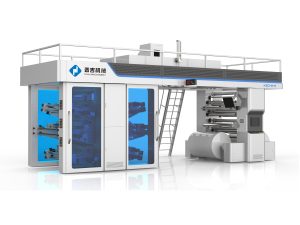
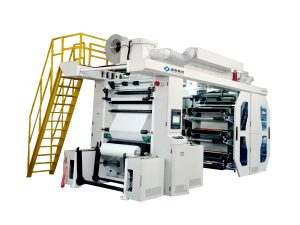
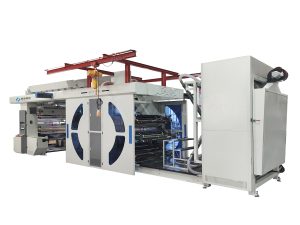
Printing on thick paper and cardboard presents unique challenges, from maintaining consistent feed to achieving sharp impressions on uneven surfaces. Stack-type flexographic printing machines are particularly well-suited for this task due to their robust construction and straightforward web path. Their vertical unit design allows for better control and support of rigid materials compared to some other press types. This guide explains how stack presses are configured to handle thicker substrates effectively.
Key Adjustments for Thick Substrate Printing
Successfully running cardboard or heavy paper requires specific machine setups. The table below outlines the critical adjustments compared to printing on standard thin films or paper.
| Machine Component | Setup for Standard Thin Materials (e.g., film, label stock) | Setup for Thick Paper / Cardboard |
|---|---|---|
| Unwind & Infeed | Standard tension control for flexible webs. | Enhanced tension control with larger dancer rolls to handle rigidity; anti-curl devices may be needed. |
| Printing Impression | Standard pressure settings. | Increased and carefully balanced impression pressure to transfer ink to the less compressible surface. |
| Plate Cylinder | Standard cylinders. | May require under-cut or specially mounted plates to compensate for material thickness and prevent gear binding. |
| Anilox Roller | Selected based on job (line screen/volume). | May require higher volume anilox rolls to deposit more ink for solid coverage on absorbent board. |
| Drying System | Interstation and main dryers for thin webs. | High-velocity, hot-air dryersessential to penetrate and dry ink on thick, heat-sink-like board. |
| Delivery & Rewind | Standard rewind for rolls. | Often requires sheet stacking, conveying, or jogging systems for cut-sheet board, rather than roll rewind. |
Robust Web Handling and Transport
The journey of a thick substrate through a stack press begins at the unwind. Unlike thin films, cardboard is rigid and less forgiving. To prevent cracking or creasing, the infeed section must provide strong, stable tension control. Stack presses designed for board stock often feature heavy-duty unwind stands with larger rollers to minimize bending stress. As the material travels vertically between the printing units, its own rigidity helps it stay flat, which is an advantage of the stack design. However, precise guide rollers are essential to keep the thick edge of the board tracking straight without wandering.
Achieving Consistent Impression on Rigid Surfaces
The heart of printing on cardboard lies in the impression system. Thick paper does not conform to the printing plate like a thin film does. Therefore, you need to apply greater and more uniform impression pressure to force the substrate against the plate and transfer the ink. This is achieved by carefully adjusting the position of the central impression cylinder or the plate cylinder. On a stack press, each color unit can be independently adjusted, allowing operators to fine-tune the pressure for each station. Too little pressure results in a “skipping” or incomplete image; too much can crush the board’s fibers or cause dot gain. The goal is to find the “sweet spot” where the entire image area receives firm, even contact.
Plate and Anilox Considerations for Board Stock
Printing on cardboard often involves large solid areas of color (common for corrugated boxes) or simpler line art. This influences your choice of plates and anilox rollers. You may use slightly softer durometer plates that can better conform to the minor surface variations of the board. Furthermore, because cardboard is porous and absorbent, you might need anilox rollers with higher cell volumes (lower line screens) to lay down a thicker ink film to achieve vibrant, dense solids without the ink being completely absorbed and looking washed out. This is a shift from the high-line-screen aniloxes used for fine process work on labels.
Drying Challenges and Solutions
Drying ink on thick paper or cardboard is significantly harder than on thin materials. The substrate itself acts as a heat sink, drawing heat away from the ink. Standard dryers may not effectively cure the ink sitting on the surface, leading to smearing in subsequent units or at the delivery. To combat this, stack presses for board printing are equipped with powerful, high-velocity hot-air dryers between stations. These dryers blast heated air directly onto the printed surface to evaporate solvents (for water-based inks) or set the ink. Adequate drying is critical, especially for multi-color work, to prevent the next color from picking up wet ink from the previous station.
Delivery Systems: From Rolls to Stacks
One of the biggest differences when printing thick stock is how the final product is collected. While thin materials are typically rewound into a roll, printed cardboard sheets are often needed as individual pieces. Therefore, a stack press configured for this market will be equipped with a sheet delivery system instead of a rewind. This can include sheeting units that cut the web precisely after printing, followed by stacking, conveying, or jogging tables that neatly pile the finished sheets for easy removal and further processing like die-cutting or folding.
FAQs
Q: What is the main challenge when printing on cardboard compared to thin paper?
A: The primary challenges are maintaining even ink coverage on a more rigid, less compressible surface and effectively drying the ink, as the thick board absorbs heat and can cause smearing. This requires greater impression pressure and more powerful drying systems.
Q: Can any stack flexo press print on thick cardboard?
A: Not all are designed for it. Presses intended for board printing typically have heavier-duty construction, stronger drives to handle the rigidity, more robust impression mechanisms, and enhanced drying capabilities compared to presses built solely for thin films or labels.
Q: Do I need special plates for printing on corrugated cardboard?
A: Yes, often recommended. Softer durometer plates can help compensate for the uneven surface of corrugated board, ensuring better ink transfer to the fluted areas. They help achieve more consistent solid coverage without excessive pressure that could crush the board.
Q: Why is a sheet delivery system often used for cardboard printing?
A: Because cardboard is often used for boxes and displays, the final product is needed as individual sheets for further processing like cutting and folding. A sheet delivery system stacks the printed sheets neatly, whereas a rewind system would roll them, which is not practical for rigid board.
Conclusion
Stack-type flexo presses are highly adaptable machines that can effectively handle the rigors of thick paper and cardboard printing. By optimizing web tension, impression pressure, ink delivery, and drying power, operators can achieve high-quality, consistent results on these demanding materials. The key is understanding how each machine component must be adjusted to work with the unique physical properties of board stock.
Looking for a robust printing solution built to handle your toughest cardboard jobs? With over 20 years of industry experience, PuJi Machinery designs and manufactures flexo presses engineered for reliability and performance on a wide range of substrates. Contact us today to discuss your specific application and discover the right machine for your production line.