Skip to content
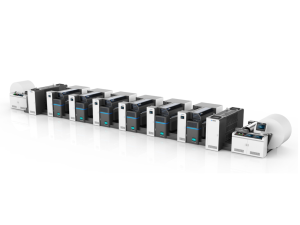
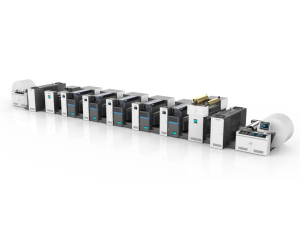
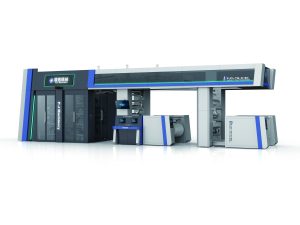
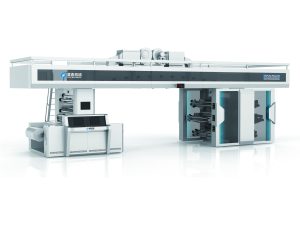
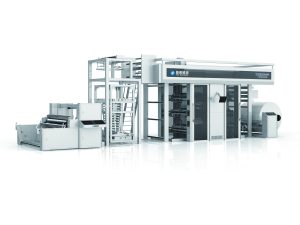
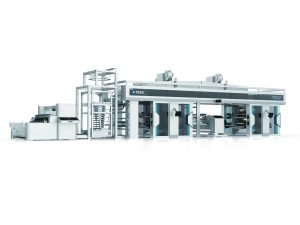
In the world of packaging and label production, flexographic printing—commonly called flexo—has emerged as the go-to technology for brands across food, beverage, pharmaceutical, and consumer goods industries. The reasons are clear: high-speed production, exceptional print quality on a wide range of substrates, lower operating costs, and sustainability advantages. As brands push for faster time-to-market and more flexible packaging options, flexo printing delivers the performance needed. At PuJi Machinery, we manufacture advanced flexographic printing presses designed to meet these evolving demands. Explore our solutions at Our Web.
Flexo vs. Alternative Printing Technologies
The table below compares flexographic printing with other common packaging printing methods. Understanding these differences helps explain why flexo has become the preferred choice for so many brands.
| Factor | Flexographic (Flexo) | Gravure | Digital | Offset |
|---|---|---|---|---|
| Substrate Range | Extremely wide: films, paper, foil, corrugated, non-wovens | Limited to smooth, thin webs | Wide, but speed limited on certain materials | Primarily paper and board |
| Print Speed | Very high (200–600 m/min) | High (200–500 m/min) | Moderate (20–150 m/min) | Moderate (150–300 m/min) |
| Setup/Changeover | Fast with modern automated presses (15–30 min) | Slow (hours); engraved cylinders require replacement | None (digital files) | Moderate (30–60 min) |
| Print Quality | Excellent; now comparable to gravure with advanced plates | Highest detail and consistency | Good, improving with inkjet technology | Excellent on flat substrates |
| Cost for Short Runs | Competitive; automated presses make short runs economical | High; engraved cylinders costly | Most economical for very short runs | Moderate |
| Cost for Long Runs | Most economical | Economical at extremely high volumes | Higher per-unit cost | Moderate |
| Ink Type | Water-based, solvent, UV/LED, EB | Solvent, water-based | UV/LED, water-based | Solvent, water-based |
| Sustainability | Excellent; thinner plates, less waste, energy-efficient drying | Moderate; solvent emissions, heavy cylinders | Good; no plates, minimal waste | Moderate |
Unmatched Substrate Versatility
One of flexography’s greatest strengths is its ability to print on nearly any material. Unlike gravure, which requires smooth, thin webs, or offset, which is limited to paper and board, flexo presses handle films (PE, PET, BOPP, PVC), foil, paper, corrugated board, non-wovens, and laminates—often in the same production run. This versatility allows brands to use a single printing technology across multiple product lines, simplifying equipment investment and operator training. For converters serving diverse markets, flexo’s substrate flexibility is a major competitive advantage.
High Speed with Rapid Changeover
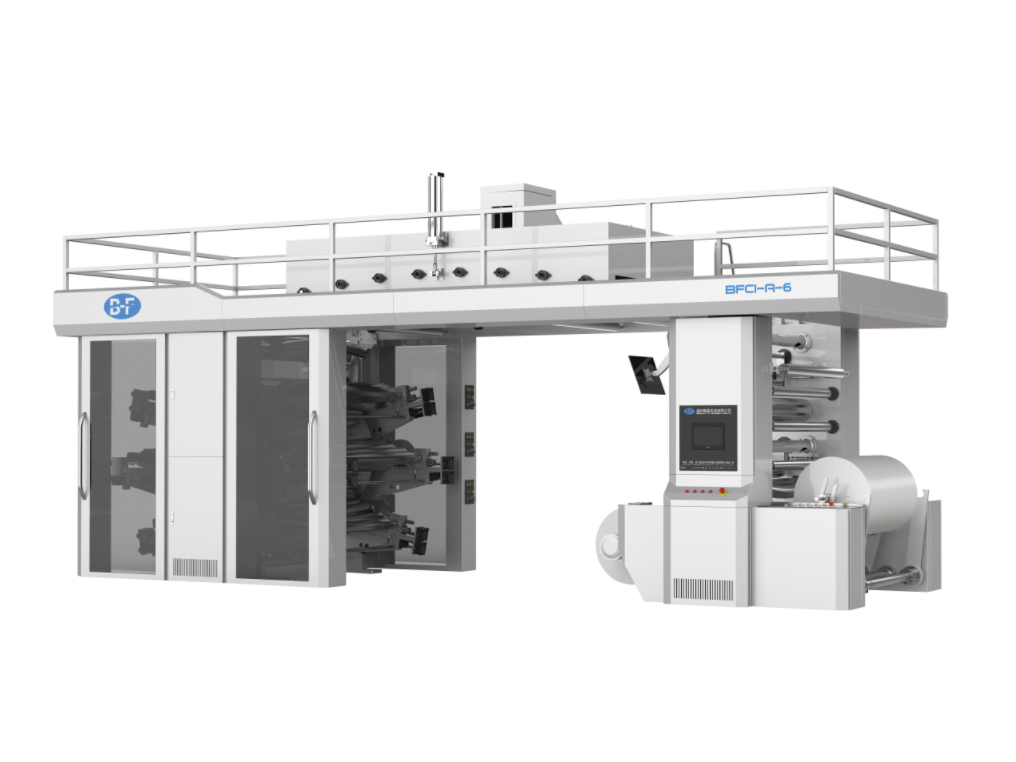
Modern packaging lines demand high throughput. Flexographic presses routinely operate at 200–600 meters per minute, matching or exceeding gravure speeds. However, the real efficiency gain comes from rapid changeover. Traditional gravure requires changing engraved cylinders—a process taking hours—for each new job. Automated flexo presses with servo-driven technologyand quick-change sleeve systems allow complete job changeovers in 15–30 minutes. For brands running multiple SKUs or frequent packaging updates, this agility reduces downtime and enables just-in-time production.
Print Quality That Competes with Gravure
Historically, gravure was considered the gold standard for print quality, especially for photographic images and fine text. Advances in photopolymer plate technology, high-definition screening, and servo-driven registration have narrowed—and in many cases eliminated—that gap. Modern flexo presses achieve line screens of 150–200 lpi (lines per inch) and can reproduce smooth gradients, fine vignettes, and sharp text. With full-color process printing and expanded gamut inks, flexo now meets the demanding quality requirements of premium food packaging, pharmaceutical labels, and high-end consumer goods.
Lower Total Cost of Ownership
For most brands, flexo offers the lowest total cost of ownership across typical run lengths. Compared to gravure:
-
No expensive engraved cylinders: Flexo uses photopolymer plates that cost a fraction of engraved cylinders.
-
Faster changeovers: Less downtime between jobs.
-
Lower energy consumption: Modern flexo presses, especially with LED-UV curing, consume significantly less energy than gravure with large drying ovens.
-
Reduced waste: Automated tension control and preset systems minimize setup waste.
For short to medium runs (from thousands to several million impressions), flexo is consistently more economical than gravure. Digital printing remains cost-effective for very short runs (under 5,000 impressions), but as volumes increase, flexo’s per-unit cost drops below digital.
Sustainability and Environmental Benefits
Brands face increasing pressure to reduce environmental impact. Flexo printing offers several sustainability advantages:
-
Water-based and UV/LED inks: Water-based inks eliminate solvent emissions. UV/LED curing consumes less energy and produces no VOCs (volatile organic compounds).
-
Thinner plates and less waste: Photopolymer plates use less material than gravure cylinders. Setup waste is minimized with modern automation.
-
Energy efficiency: Servo-driven presses consume power only when running. LED-UV curing uses up to 70% less energy than traditional drying systems.
-
Compatibility with recyclable materials: Flexo prints effectively on mono-materials designed for recycling, supporting circular economy initiatives.
For brands committed to sustainability goals, flexo aligns with reducing carbon footprint while maintaining production efficiency.
Integration with Inline Converting
Modern flexographic presses are often part of integrated converting lines. A single machine can print, laminate, die-cut, slit, and rewind in one continuous process. This eliminates intermediate handling, reduces work-in-progress inventory, and shortens lead times. Servo-driven flexo presses integrate seamlessly with slitter rewinders, laminators, and pouch-making equipment, allowing converters to offer complete packaging solutions from a single production line.
Adaptability to Short Runs and Personalization
The rise of e-commerce and direct-to-consumer brands has increased demand for short runs and frequent packaging updates. Flexo technology has adapted through:
-
Sleeve technology: Quick-change print sleeves reduce changeover time and cost.
-
Automated setup: Servo-driven register systems eliminate manual adjustments.
-
Hybrid flexo-digital presses: Some configurations add digital inkjet heads for variable data (batch codes, serialization, personalization) while maintaining flexo’s speed for static elements.
This flexibility allows brands to run short promotional packaging, regional variants, or seasonal designs without the prohibitive costs associated with gravure.
Global Supply Chain and Technical Support
Flexo is a globally standardized technology with widespread availability of plates, inks, sleeves, and trained technicians. For brands operating across multiple regions, this means consistent print quality and rapid support regardless of location. Gravure, by contrast, often relies on specialized cylinder engravers and regional expertise, which can create supply chain bottlenecks.
FAQs
1. What is the typical print quality of modern flexo presses?
Modern flexo presses achieve 150–200 lpi line screens with excellent highlight and shadow detail, making them suitable for premium packaging, labels, and even photographic reproduction.
2. How long does a flexo plate last compared to a gravure cylinder?
Flexo plates typically last 1–3 million impressions depending on substrate and ink. Gravure cylinders can last 10–20 million impressions but require longer and more costly replacement.
3. Is flexo printing suitable for food packaging?
Yes. Flexo presses use food-grade water-based, solvent-based, and UV/LED inks approved for food contact. The technology is widely used for food flexible packaging, labels, and cartons.
4. What is the minimum run length that makes economic sense for flexo?
With automated changeovers, flexo is cost-effective for runs as short as 5,000–10,000 linear meters. For shorter runs, digital printing may be more economical; for extremely high volumes, gravure may still have advantages.
5. Can flexo presses print on both sides of the web?
Yes. Many flexo presses are configured with turn bars or dual-sided printing stations to print on both sides of the substrate in a single pass.
6. What is the difference between CI (central impression) and stack flexo presses?
CI presses have all print stations around a central drum, offering shorter web path and precise registration—ideal for thin films. Stack presses have vertically arranged decks, suitable for paper and less stretch-sensitive materials.
7. How does LED-UV curing benefit flexo printing?
LED-UV curing uses less energy, produces no ozone, allows printing on heat-sensitive substrates, and enables instant curing without solvents or long drying tunnels.
Conclusion
More brands are choosing flexographic printing because it combines substrate versatility, high speed, rapid changeover, print quality that rivals gravure, lower total cost, and sustainability benefits. Whether for flexible packaging, labels, corrugated, or folding cartons, flexo delivers the performance modern brands need to stay competitive in fast-moving markets.
Ready to upgrade your packaging printing capabilities? PuJi Machinery designs and manufactures high-performance flexographic printing presses tailored to your production requirements. Contact us today for a consultation or request a quote!