Skip to content
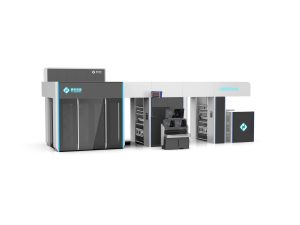
Choosing the right Central Impression (CI) flexo press is one of the most significant investments a flexible packaging business will ever make. As you browse through efficient flexo printing solutions, the debate usually boils down to two distinct technologies: High-Speed Servo and traditional Gear-Drive. At PuJi Machinery
, we understand that balancing upfront capital expenditure with long-term operational costs is a challenge. This guide will break down the technical differences and ROI factors to help you determine which machine delivers the most value for your specific budget.
Understanding Gear-Drive CI: The Proven Workhorse
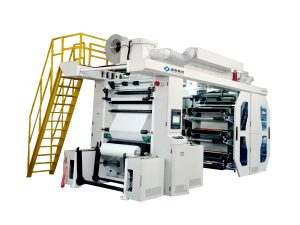
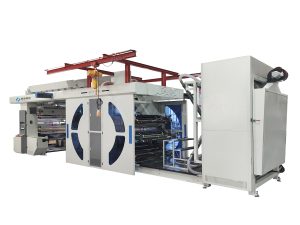
For many growing businesses, the gear-drive CI flexo press represents the most cost-effective flexo press entry point. In this configuration, the printing stations are mechanically linked to a central drum via a series of precision gears. While this is a “traditional” technology, modern engineering has refined it to be remarkably stable. It is an ideal choice for companies focusing on long runs with consistent designs where frequent changeovers aren’t required.
The primary appeal of gear-drive systems lies in their simplicity and lower initial purchase price. Because they rely on mechanical synchronization rather than complex electronic components, the initial investment is significantly lower. Furthermore, CI flexo press maintenance is often more straightforward for local technicians to handle, as it involves mechanical adjustments rather than software-based troubleshooting. If your budget is tight and your product line is stable, gear-drive remains a reliable powerhouse.
The Rise of High-Speed Servo CI: Precision and Automation
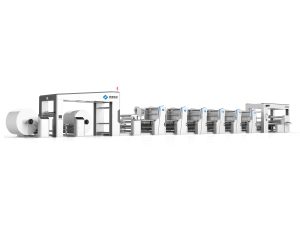
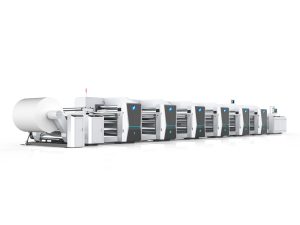
If your business model demands high versatility and rapid turnaround, a high-speed servo-drive CI press is the gold standard. Unlike gear-driven models, each printing station in a servo system is powered by its own independent motor. This allows for digital control over every movement, resulting in superior high-speed printing efficiency and near-perfect registration. For high-end labels and complex multi-color packaging, the servo system eliminates “gear marks” and mechanical vibrations.
The true value of servo technology isn’t just in its speed, but in its ability to reduce waste. With automated pre-register systems, you can achieve color matching and registration with minimal substrate loss. In an era where material costs are rising, the “waste reduction” aspect of a servo machine often offsets its higher price tag within the first few years of operation. For shops handling short runs and frequent job changes, the time saved during setup is a massive competitive advantage.
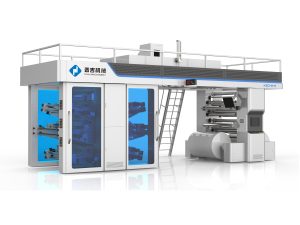
Side-by-Side Comparison: Technical Specs & Budget Impact
To help you visualize the trade-offs, here is a quick comparison of how these two technologies stack up:
| Feature | Gear-Drive CI Press | High-Speed Servo CI Press |
| Initial Investment | Lower / Budget-Friendly | Higher / Premium |
| Max Printing Speed | 150 – 250 m/min | 300 – 500+ m/min |
| Setup Time | Manual / Slower | Automated / Very Fast |
| Registration Accuracy | Good (Mechanical) | Excellent (Electronic) |
| Maintenance Type | Mechanical / Lubrication | Electronic / Software Updates |
| Substrate Waste | Moderate during setup | Minimal (Auto-registration) |
Budgeting for the Long Term: ROI Analysis
When deciding which machine fits your budget, you must look beyond the sticker price. A gear-drive machine might save you $100,000 today, but if it takes 45 minutes longer to set up every job and wastes 200 meters of film per run, those costs will eventually exceed the price of a servo machine. Conversely, if you run the same job for three days straight, the advanced automation of a servo motor sits idle, making the gear-drive the smarter financial choice.
At PuJi Machinery, we recommend evaluating your “Average Job Length.” If your average run is under 5,000 meters, the servo-drive’s efficiency will pay for itself. For massive bulk orders where the machine rarely stops, the gear-drive offers a faster path to profitability. We provide customized consultations at PuJi Machinery to help you calculate these specific projections based on your local material and labor costs.
Why PuJi Machinery is Your Ideal Partner
Navigating the complexities of CI flexo printing technology requires a partner who values your bottom line as much as your print quality. PuJi Machinery specializes in bridging the gap between high-end performance and realistic pricing. Whether you choose our robust gear-driven models for their durability or our cutting-edge servo systems for their precision, you receive a machine built with premium components and backed by expert global support.
FAQs
1. Can a gear-drive CI press handle thin plastic films?
Yes, but it requires precise tension control. While servo machines are naturally better at handling “stretchy” films due to independent motor control, a well-calibrated gear-drive press from PuJi Machinery can still achieve high-quality results on various substrates.
2. How much does a servo-drive system reduce setup waste?
On average, a high-speed servo system can reduce substrate waste by 40% to 60% during the registration process compared to manual gear-drive adjustments, significantly lowering your per-job costs.
3. Is it harder to find operators for servo-drive machines?
Actually, it’s often easier. Modern servo machines feature intuitive touch-screen interfaces and “job memory” functions, which reduce the need for the highly specialized mechanical “feel” required to operate older gear-driven presses.
Conclusion
Choosing between High-Speed Servo and Gear-Drive CI depends on your production volume and job complexity. Gear-drive is perfect for budget-conscious long-run stability, while Servo is the king of efficiency and high-precision short runs. Ready to upgrade your production line? Visit PuJi Machinery today to explore our full range and get a personalized quote that fits your budget!