Skip to content
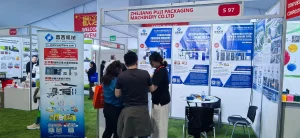
Expo Plast Peru 2026 — Lima, August 19–22 — Across four days at Latin America’s premier plastics exhibition, the Puji Machinery team met packaging converters from Peru, Colombia, Chile, Ecuador and beyond. The conversations were remarkably consistent: everyone wanted to talk about flexible packaging growth, film printing quality, and the economics of new equipment.
This article combines what we heard on the show floor with the market data behind it — a practical picture of where South America’s packaging market is heading, and what it means for converters planning their next machine purchase.
Peru’s packaging sector is growing faster than most buyers realize:
| Indicator | Value | Source |
|---|---|---|
| Peru plastics industry annual output | ~$2 billion | Expo Plast Peru 2026 |
| Packaging demand growth | ~10% year-on-year | Expo Plast Peru 2026 |
| Peru packaging product exports (2024) | $706.9 million | Industry data |
| Export growth year-over-year | +17.1% | Industry data |
| Plastic packaging share of exports | 73.2% | Industry data |
The growth is led by the food and beverage sector — which means flexible film packaging is where the demand concentrates. For converters, that translates into a concrete need: printing on thin films (BOPP, PE, PET) with speed, precision, and food-grade quality.
What Converters at the Show Were Actually Asking
Beyond the macro numbers, the show floor told a clearer story. Three questions came up repeatedly:
1. “Can this press handle thin film without stretching it?”
LDPE and BOPP films stretch easily at speed. Tension control — not top speed — is what separates a stable run from a waste roll. This is the single most common concern we heard.
2. “What’s the real cost per meter?”
Converters in this market are ROI-driven. They asked about energy consumption (drying systems especially), ink waste, and changeover time — not just the machine price.
3. “Will the color be consistent across shifts?”
With food brands enforcing stricter print standards, color repeatability is becoming a buying criterion, not a nice-to-have.
The Three Trends Reshaping South American Packaging
1. Food-Grade Flexible Packaging Is the Growth Engine
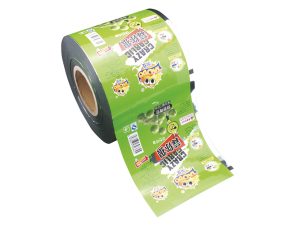
Peru’s food service and retail sectors are expanding, driving demand for printed flexible packaging — from snack films to food pouches. Converters need presses that handle food-safe water-based inks and thin films down to 15 microns while keeping registration tight.
2. Automation Is Moving Down-Market
Automation was once reserved for high-end lines. At Expo Plast Peru, mid-sized converters were asking about servo-driven registration, automatic tension control, and faster changeovers — because labor costs and operator skill gaps are real constraints across the region.
3. Sustainability Rules Are Arriving
Latin American markets are introducing extended producer responsibility (EPR) schemes and recycled-content requirements. Converters are preparing by:
- Running water-based and UV inks
- Choosing energy-efficient drying systems (30%+ energy savings on closed-loop hot air systems)
- Reducing waste through precision registration and tension control
- Testing recyclable and biodegradable substrates

Which Flexo Press Fits the South American Market
Based on what we heard in Lima, the demand clusters into three machine categories:
For Flexible Film Packaging (the growth segment)
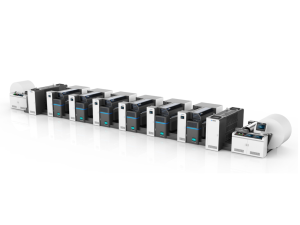
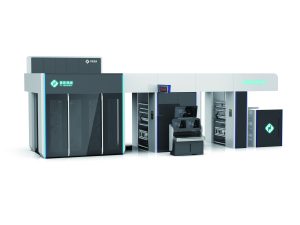
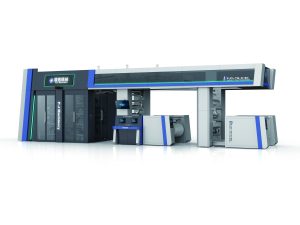
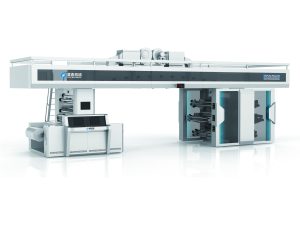
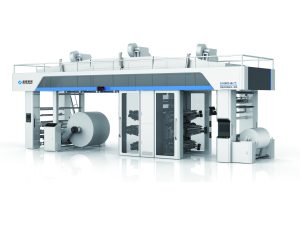
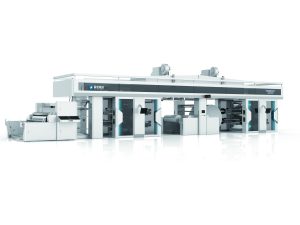
CI flexo presses are the gold standard for high-precision film printing on BOPP, PE, PET, and breathable films. Available in economic, servo, and full-servo configurations, they deliver printing speeds up to 600 m/min and registration accuracy as tight as ±0.05 mm — the right tool for converters targeting food brands and export markets.
For Startups and Growing Businesses (the value segment)
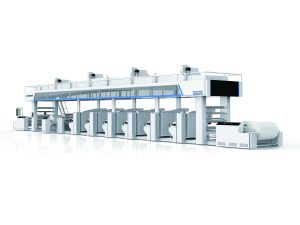
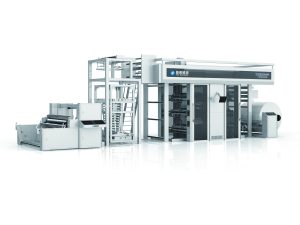
Stack-type flexo presses offer a cost-effective entry point for non-woven bags, general packaging, and woven sack printing. With quick ROI and simple operation, they suit converters entering flexible packaging for the first time.
For Paper-Based Converting (the adjacent segment)
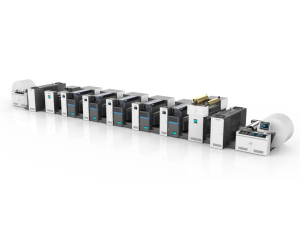
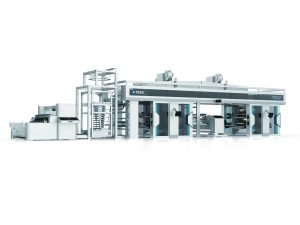
Inline flexo presses handle paper cups, paper bags, carton pre-printing, and pharmaceutical paper packaging — a steady demand stream as food service packaging grows alongside flexible film.
Why Converters Need a Partner, Not Just a Machine
The most repeated phrase at our booth: “We don’t want a machine — we want a partner who understands our market.”
South American converters face thin-film handling challenges, evolving regulations, and tight capital budgets. The right equipment supplier matters as much as the right machine. That’s why Puji Machinery approaches every project with:
- Application-specific machine configuration (not one-size-fits-all)
- Transparent ROI discussions before purchase
- Installation, training, and after-sales support
- Compatibility with food-grade inks and recyclable substrates
Expo Plast Peru 2026: Thank You
To every converter who visited our booth in Lima — thank you. The conversations shaped this article, and they will shape how we support South American customers going forward.
To those we did not meet at the show: our team remains available for technical consultations, machine specifications, and customized project proposals. Reach us through the contact page.
FAQ: South America Flexible Packaging and Flexo Machines
Is South America’s flexible packaging market really growing?
Yes. Peru’s packaging demand grew roughly 10% year-on-year at Expo Plast Peru 2026, led by food and beverage. Packaging exports reached $706.9 million in 2024, up 17.1% year-over-year, with plastic packaging accounting for 73.2% of the total.
What kind of flexo press is best for film printing?
For thin films (BOPP, PE, PET), a CI (central impression) flexo press is the industry standard — it offers the best registration accuracy and tension control for stretchy films.
Are stack-type flexo presses suitable for beginners?
Yes. Stack-type presses are cost-effective, simpler to operate, and ideal for non-woven bags, general packaging, and growing businesses seeking quick ROI.
Do Puji machines support food-grade printing?
Yes. Puji flexo presses are compatible with food-grade water-based inks and can print films as thin as 15 microns, making them suitable for food packaging applications.
How is sustainability affecting machine choices in South America?
EPR schemes and recycled-content rules are pushing converters toward water-based/UV inks, energy-efficient drying, and reduced waste. Puji machines support these requirements across the product line.
About Zhejiang Puji Packaging Machinery Co., Ltd.
Zhejiang Puji Packaging Machinery Co., Ltd. is a technology-driven group enterprise with over 20 years of flexo engineering experience, 50+ invention patents, and 500+ machines installed across 50+ countries. All machines are ISO 9001:2015 and CE certified. The company offers CI flexo presses, stack-type flexo presses, inline flexo presses, and complete packaging converting solutions.