Skip to content
Introduction
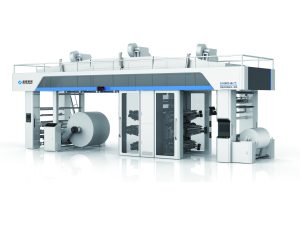
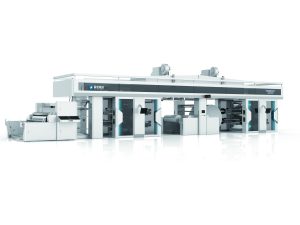
Investing in a flexographic printing machine is a significant decision that impacts your production efficiency, print quality, and bottom line. With advancing technology, modern machines offer a range of smart features designed to automate processes, reduce waste, and enhance sustainability. This guide highlights seven crucial features to evaluate, ensuring you select a flexographic printer that meets your business demands. For reliable, high-performance solutions, PUJI Flexo Machinery offers a comprehensive range of machines engineered with these advanced capabilities.
Advanced Automation and Quick Setup
Automation is the cornerstone of modern flexo printing. Look for machines that minimize manual intervention through features like automatic setup systems. This includes automated plate mounting, impression setting, and ink viscosity control, which drastically reduce job changeover times from hours to minutes .
Systems with robotic sleeve handling and automated reel diameter detection further streamline operations, reducing downtime and operator errors . A high degree of automation is essential for improving overall equipment effectiveness (OEE) and profitability.

Precision Servo Drive Technology
Traditional mechanical drives are being replaced by advanced servo motor drive systems, which provide independent control over each printing unit and key machine functions .
This technology ensures:
-
Superior Registration Accuracy: Maintains precise color-to-color registration even at high speeds.
-
Quick Job Changeovers: Enables faster setup and format changes.
-
Seamless Tension Control: Provides consistent web tension across a wide range of substrates, reducing waste and improving print quality .
Servo-driven presses are favored for complex, multi-color printing on demanding flexible packaging materials.
Advanced Control and Monitoring Systems
Modern flexo presses feature sophisticated control systems for enhanced visibility and control. Look for machines equipped with PLC (Programmable Logic Controller) intelligent control systemsand user-friendly HMI (Human-Machine Interface) touchscreens .
These systems provide real-time data on machine performance, register status, and drying temperatures. Some integrate Industry 4.0 readiness and cloud connectivity for remote diagnostics and predictive maintenance, significantly reducing unplanned downtime .
Efficient and Sustainable Drying Systems
Drying capacity is a key factor in maximizing production speed. Evaluate the drying system’s efficiency, as it directly impacts energy consumption and print quality. Features to consider include:
-
High-Capacity, Energy-Efficient Dryers: Modern systems use optimized airflow and high-efficiency components to reduce energy consumption .
-
Multi-Level Drying Control: Ability to precisely control drying intensity between units for different ink and substrate combinations.
-
Compatibility with Eco-Friendly Inks: Systems designed for water-based and UV LED inks support sustainability goals and reduce solvent emissions .
Efficient drying allows for higher press speeds without compromising print quality.
Superior Print Quality Engineering
Several design features directly contribute to exceptional print quality. A key innovation is the “zero ghosting” design for chambered doctor blades, which ensures consistent ink transfer and prevents print defects .
Additionally, a robust mechanical structure with features like satellite (CI) drum alignment and closed-loop constant tension control is vital for eliminating bounce and ensuring stable register, resulting in sharp, high-definition prints .
Quick-Change and User-Friendly Design
To maximize productivity, machines should be designed for fast and easy operation. Key design features include:
-
Tool-less Changing Systems: For quick plate sleeve or anilox roll changes .
-
Ergonomic Design: Improved machine accessibility, separate work areas, and easy-to-clean surfaces .
-
Intuitive Interfaces: Guided setup systems that simplify operator training and reduce setup errors .
Modularity and Versatility
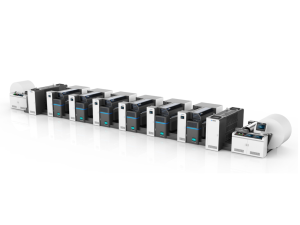
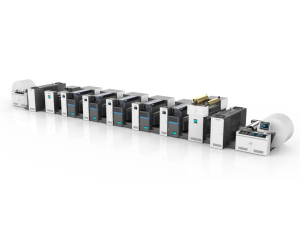
A modular machine design offers long-term flexibility. Machines that can be configured with 8 or 10 printing units and various inline options (like laminating) can adapt to changing production needs .
Look for presses that handle a wide variety of substrates—from thin films and foils to paper and cardboard—with both solvent- and water-based inks. This versatility allows a single machine to meet diverse printing needs for food, beverage, and pharmaceutical packaging .
Summary of Key Features
| Feature | Benefits |
|---|---|
| Advanced Automation | Reduced setup time, minimized operator error, higher OEE |
| Servo Drive Technology | Superior registration, quick job changes, precise tension control |
| Advanced Control Systems | Real-time performance monitoring, Industry 4.0 readiness |
| Efficient Drying Systems | Lower energy use, higher speeds, supports eco-friendly inks |
| Print Quality Engineering | Consistent color, high-definition output, eliminates defects |
| Quick-Change Design | Ergonomic, tool-less setup, reduced maintenance time |
| Modularity & Versatility | Handles wide substrate range, scalable for future needs |
FAQs
What is the maximum speed of a modern high-speed flexo press?
High-performance CI flexo presses can achieve speeds of up to 600 meters per minute , while some entry-level models operate between 70-80 m/min . The speed directly relates to the machine’s automation level and drying capacity.
What is the difference between a mechanical drive and a servo-driven machine?
A mechanical drive uses gears and shafts to synchronize printing units, while a servo-drivenmachine uses independent motors. Servo drives offer superior register accuracy, faster job changeovers, and reduced mechanical wear, making them ideal for complex print jobs .
What substrates can a modern flexo press handle?
Modern flexo presses are highly versatile and can handle a broad range of substrates, including paper, plastic films (PE, BOPP), metalized foils, and laminated materials, making them suitable for flexible packaging, labels, and cartons .
What sustainability features should I look for?
Key sustainability features include energy-efficient drying systems, compatibility with water-based and EB inks, and designs that minimize ink and material waste . Some presses also feature “pre-capture” drying bridges to reduce solvent emissions .
Conclusion
Selecting the right flexographic printing machine requires careful evaluation of smart features that automate production, enhance print quality, and ensure long-term versatility. Prioritizing advanced automation, precision servo drives, and efficient drying systems will help you achieve higher productivity and lower operating costs. For state-of-the-art flexographic solutions engineered with these capabilities, explore the range from PUJI Flexo Machinery at https://www.pujimachinery.comand invest in the future of your printing operations.