Skip to content
Are you searching for a reliable flexographic printing press for sale to upgrade your production facility? Choosing between various mechanical configurations can be complex for any growing business. Whether you need a high-precision CI flexo printing machine or a versatile automatic flexographic printing machine, understanding the four primary types is essential to maximizing your long-term ROI. This guide explores the engineering behind each model, helping you select the perfect match for your specific substrate and output goals.
The Strategic Importance of Machine Configuration
When you decide to invest in new equipment, you aren’t just buying a tool; you are defining the technical limits of your business. The type of flexo press you choose dictates which materials you can print on, how fast you can run your lines, and the level of detail you can offer your clients. For companies focusing on high-quality flexible packaging, the choice usually boils down to how the substrate is supported during the ink transfer process.
In today’s market, speed and precision are no longer optional. Customers demand shorter lead times and vibrant, photo-realistic colors. To meet these expectations, you must align your factory’s capabilities with the right machinery. Let’s break down the four major types of flexo printing machines that dominate the modern packaging landscape.
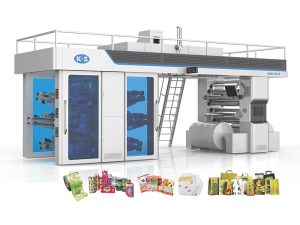
Central Impression (CI) Flexo Printing Machines
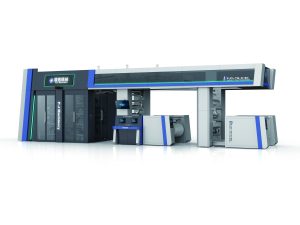
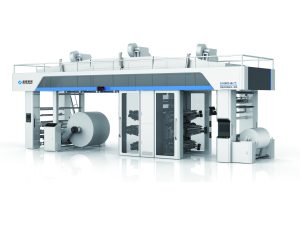
The CI flexo printing machine is widely considered the “gold standard” for high-end flexible packaging. In this configuration, all the printing units are arranged around a single, large-diameter central impression cylinder. As the substrate enters the machine, it is locked onto this central drum and stays there until all colors are applied.
Why it’s a Game-Changer for You:
The biggest advantage you gain with a CI press is registration stability. Because the material is supported by the drum throughout the entire color cycle, it cannot stretch or shift. This makes it the only viable choice if you are printing on thin, extensible films like PE, BOPP, or thin aluminum foils. If your business targets the food and beverage sector—where high-speed, 8-color precision is required—a CI press from a reputable flexo press manufacturer like PuJi Machinery is your best investment.
Stack Type Flexo Printing Machines
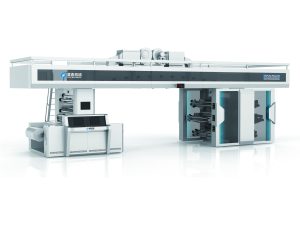
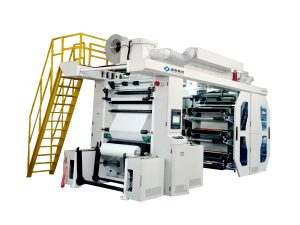
Stack presses are the traditional workhorse of the printing world. In this setup, the individual printing stations are stacked vertically, one on top of the other. Each station has its own impression cylinder, meaning the substrate travels “unsupported” between each color station.
Why it’s a Smart Choice for Entry-Level Production:
If you are looking for a competitive flexo printing machine price without sacrificing utility, the stack type is often the first choice. These machines are incredibly versatile; they allow you to print on both sides of the web in a single pass by using “turn bars.” While they are not ideal for very thin plastics due to the risk of material stretching, they excel at printing on heavy paper, thick plastic bags, and non-woven fabrics. Their compact footprint also makes them perfect if your factory floor space is limited.
Inline / Modular Flexo Printing Machines
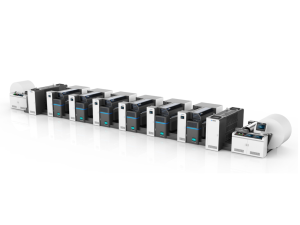
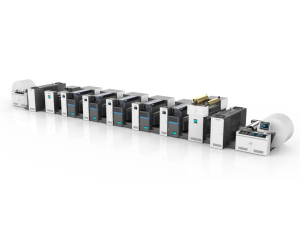
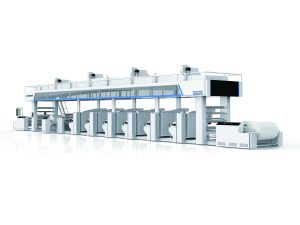
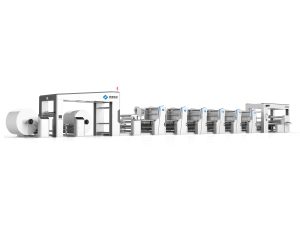
Inline presses (sometimes called modular presses) feature printing units arranged in a horizontal line. Like the stack type, each unit has its own impression cylinder. This layout is most common in the narrow-web industry, specifically for labels and tags.
Why You Should Consider Inline Systems:
The “modular” nature of these machines means you can easily integrate “finishing” stations directly into the print line. You can add die-cutting, laminating, cold-foiling, or rotary screen units after the final printing station. If your goal is to produce finished labels that are ready for the bottle-labeling machine the moment they leave the press, an inline automatic flexographic printing machine offers the highest level of efficiency.
Unit-Type (Gearless/Servo Driven) Presses
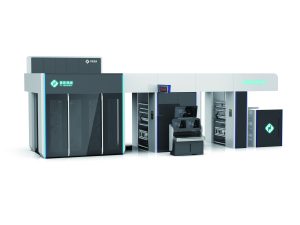
While often grouped with CI or Inline machines, the modern Unit-Type press represents a significant technological leap: the removal of mechanical gears. Traditional machines use a series of gears to sync the rollers, which can lead to “gear marks” or vibration defects at high speeds.
The Advantage of Going Gearless:
Modern unit-type machines use independent servo motors for every roller. For you, this means virtually zero mechanical wear and the ability to change print lengths digitally without changing physical gears. This technology significantly reduces setup time and waste, making it the preferred choice for businesses that handle many small-to-medium-sized orders throughout the day.
Comparative Analysis of Flexo Machine Types
To help you visualize which machine fits your specific production needs, we have compiled the following comparison table.
| Feature | CI (Central Impression) | Stack Type | Inline (Narrow Web) | Gearless / Unit-Type |
| Best Substrate | Thin films, Foil, PE | Paper, Thick bags | Labels, Cardboard | High-end Film & Paper |
| Registration | Superior (Fixed Drum) | Moderate | High | Excellent (Digital) |
| Speed | High (Up to 400m/min) | Low to Medium | Medium | Very High |
| Footprint | Large | Very Small | Long / Narrow | Medium to Large |
| Complexity | High (Requires skill) | Low (Easy to learn) | Moderate | High (Tech-heavy) |
| Dual-Side Print | Difficult (Requires 2 units) | Easy (Internal turn) | Possible | Possible |
4 Key Considerations Before You Buy
Choosing a machine is just the beginning. To ensure your investment pays off, you must look closely at the components that drive quality. At PuJi Packaging Machinery, we emphasize several critical features in every build:
- Tension Control: Without precise automatic tension control, your substrate will wrinkle or drift, regardless of the machine type. Ensure your press includes multi-point magnetic powder or servo-driven tension systems.
- Anilox Quality: The heart of the ink transfer. High-quality ceramic anilox rollers are essential for achieving consistent color density.
- Drying Capacity: At high speeds, your ink must dry instantly. Look for machines with high-velocity hot air systems or UV curing stations if you are printing on non-porous materials.
- Manufacturer Support: When you purchase from flexo press manufacturers with decades of experience, you aren’t just getting a machine—you’re getting a service network. With a 50,000-square-meter facility and 20 years of history, PuJi provides the technical backup you need to stay operational 24/7.
Expanding Your Production Capability
Once you have identified the right machine type, consider the “extras” that turn a standard press into a profit center. For instance, adding a solvent-free laminating machine to your workflow allows you to create multi-layer food packaging that meets strict safety standards. Or, if you are focusing on the retail sector, a high-speed slitting machine is necessary to convert your large printed rolls into the specific widths required by your customers.
The goal is to build a cohesive ecosystem where your printing press is the centerpiece of a high-efficiency production line. By selecting a machine that matches your current volume while leaving room for technological upgrades, you future-proof your business against changing market trends.
FAQs
Q: Which machine type offers the best value for a startup?
A: A 4-color or 6-color stack type flexo machine usually offers the best balance of cost and versatility for startups focusing on paper or basic plastic bags.
Q: Can I print high-definition photos on a flexo machine?
A: Yes, specifically on a CI flexo printing machine. With modern photopolymer plates and digital registration, you can achieve results that rival rotogravure or offset printing.
Q: How long does it take to set up a new job on a gearless machine?
A: On a modern servo-driven press, a full job changeover (plates and inks) can often be completed in under 30 minutes, compared to 2-3 hours on older mechanical machines.
Q: Does PuJi Machinery offer training for our operators?
A: Absolutely. We provide comprehensive on-site installation and training to ensure your team can operate the tension, ink, and registration systems with total confidence.
Conclusion
Selecting the right printing technology defines your operational efficiency for the next decade. Whether you opt for the precision of a CI flexo printing machine or the versatility of an inline system, your choice should be backed by a manufacturer that understands the nuances of packaging. At PuJi Packaging Machinery, we combine 20 years of expertise with cutting-edge innovation to build machines that power your growth. Explore our full catalog of high-performance presses and find the perfect fit for your production line. Contact us today for a professional consultation and a competitive flexo printing machine price. Visit PuJi Machinery to start your journey toward world-class printing quality.